4 Apr 2025

Penalties in S’pore for Unlicensed Water Heater Replacement

Why Choose Licensed. Storage Water Heater Installation in SG

Penalties in S'pore for Unlicensed Water Heater Replacement

Worried About PUB Penalties?

whatsapp icon white 24/7 Unlicensed Questions

💬 Avoid Fines, Safety Risks & Insurance Issues.
Select your issue:


1. Legal Framework & Licensing Requirements for Storage Water Heater Installation

A. Electrical Works (EMA Compliance)

  • Who Must Perform Work:
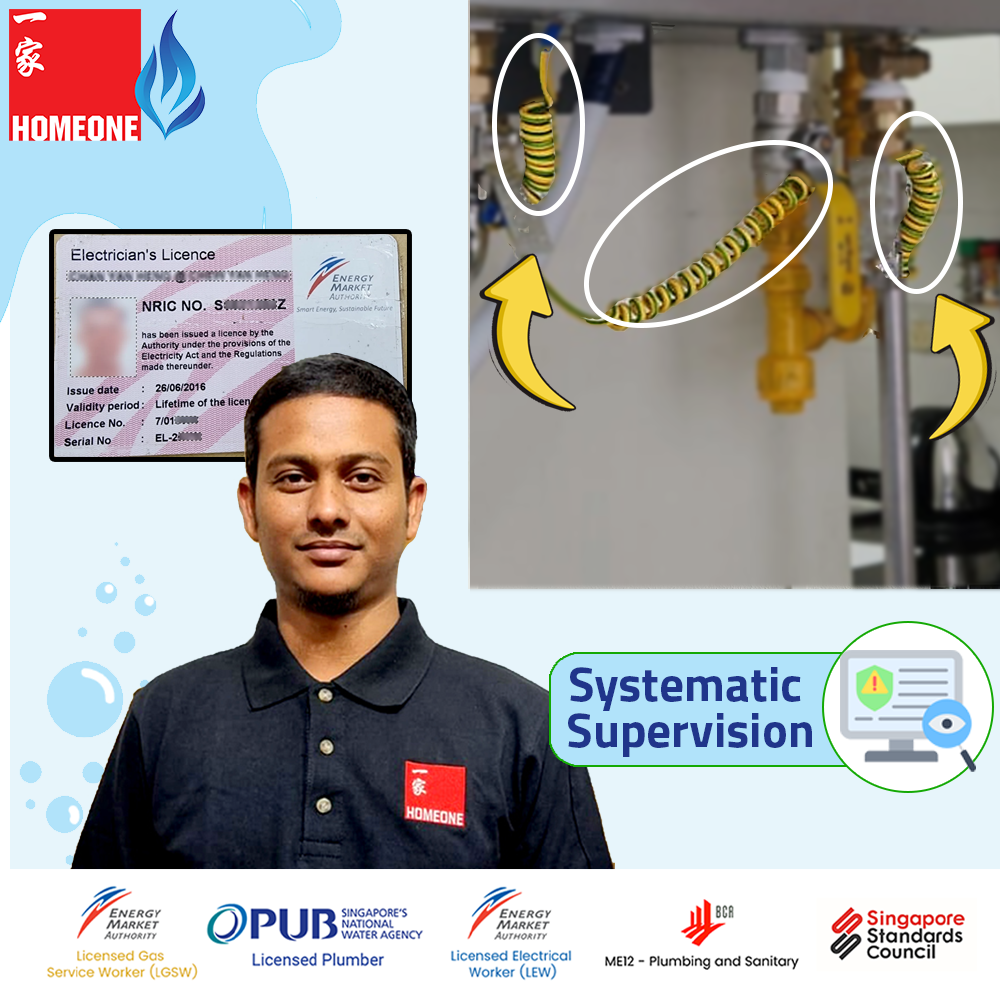
    • By or under direct supervision of an EMA-Licensed Electrician
    • Regulations:
      • Electricity Act 2001
      • Electricity (Electrical Installations) Regulations 2002
      • Singapore Standard SS 638 -2018 (Code of Practice for Electrical Installations)
      • Consumer Product Safety Office (CPSO) Safety Tips on Electric Water Heaters
    • Key Requirements:
      • Dedicated Circuit: 20A circuit with double pole heater switch for heaters ≥3.6kW, using cable 2.5mm2 or greater in conductor cross-sectional area
      • Safety Devices: RCCB/MCB protection, double-pole isolation switches  within 1.5m of the heater.
      • Certification: Submit a Certificate of Compliance (COC) post-installation.

B. Plumbing Works (PUB Compliance)

  • Who Must Perform Work:
    • PUB-Licensed Plumber for installations involving water supply (e.g., hybrid water heaters).
    • Regulations:
      • Public Utilities Act (Chapter 261, Section 40A)
      • PUB Code of Practice for Water Services (2023)
    • Key Requirements:
      • Approved Materials: PUB-certified pipes (copper/HDPE), WRAS-approved fittings.
      • Backflow Prevention: Install double-check valves to prevent contamination.
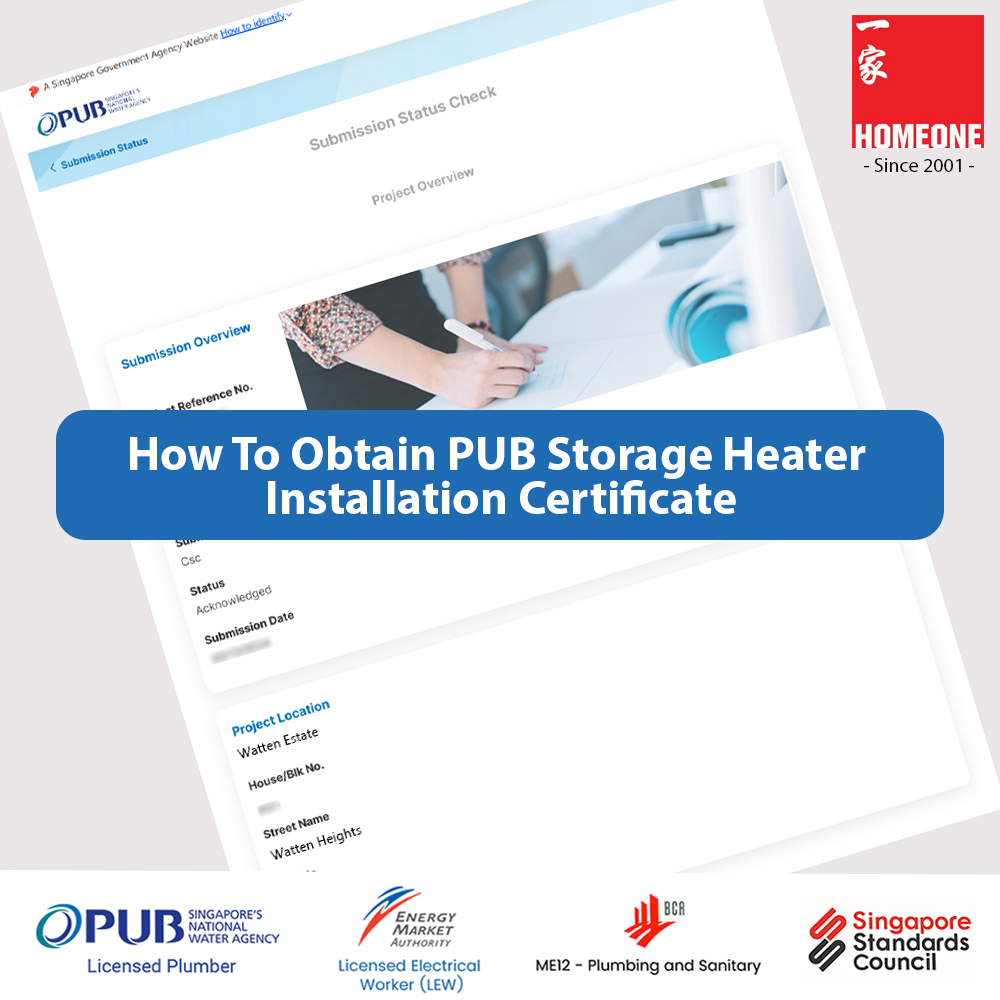
      • Submission: File a Plumbing Work Notification via PUB’s portal before starting work.

C. Building & HDB Compliance

  • BCA Standards:
    • CP 5:1998 Code of Practice for Electrical Installations in Buildings (e.g., proper earthing).
  • HDB Requirements (Public Housing):
    • Renovation Permit for electrical/plumbing works.
    • Follow HDB Technical Guidelines for Electrical Works (e.g., no heaters in wet areas without approval).

2. Key Differences: Licensed vs. Non-Licensed Work

Aspect Licensed Professional Non-Licensed Handyman
Regulatory Compliance - Follows EMA, PUB, BCA, and HDB regulations.
- Submits COC (EMA) and Plumbing Notification (PUB).
- Illegal work violating Electricity Act and Public Utilities Act.
- No permits or certifications.
Electrical Safety - Dedicated circuits, RCDs, proper earthing.
- Tests insulation resistance (≥1MΩ).
- Undersized cables, shared circuits, no safety testing.
- Fire/electrocution risks.
Plumbing Safety - Uses PUB-certified pipes, backflow prevention.
- Conducts pressure/dye tests.
- Substandard pipes, no backflow devices.
- Risk of leaks/contamination.
Inspections - EMA and PUB inspections for certification.
- Validates compliance with SCDF fire codes.
- No inspections; illegal installations risk water/electricity disconnection.
Warranty & Insurance - Maintains manufacturer warranties (e.g., Stiebel Eltron).
- Insurance claims valid.
- Warranties voided.
- Insurance denies claims for damage from unlicensed work.

3. Penalties for Non-Compliance

Electrical Violations (EMA):

  • Fines: Up to SGD 10,000 and/or 2 years imprisonment (Electricity Act Section 103).
  • COC Invalidity: Illegal installations cannot be certified, complicating property sales.

Plumbing Violations (PUB):

  • Fines: Up to SGD 10,000 and/or 3 months imprisonment (Public Utilities Act Section 40A).
  • Water Supply Cutoff: PUB may disconnect supply until violations are fixed.

HDB Violations:

  • Fines: Up to SGD 10,000 for unapproved renovations.
  • Forced Removal: Illegal installations must be dismantled at the owner’s expense.

4. Step-by-Step Compliance Process

1. Engage Licensed Professionals:

2. Submit Permits:

  • HDB Renovation Permit (if applicable).
  • PUB Plumbing Notification for water-related works.

3. Installation & Testing:

  • Electrician: Follow SS 638 for wiring, RCDs, and dedicated circuits.
  • Plumber: Adhere to PUB’s Code of Practice for pipes and backflow prevention.

4. Inspections & Certifications:

  • EMA: Submit COC after electrical inspection.
  • PUB: Provide Certificate of Completion for plumbing works.

5. Critical Codes & Standards Summary

  • EMA: SS 638, Electricity Act.
  • PUB: Code of Practice for Water Services (2023), Public Utilities Act.
  • BCA: CP 5:1998 (Building Electrical Safety).
  • HDB: Technical Guidelines for Electrical Works.
  • SCDF: Fire Safety Act (clearance from combustible materials).

6. Why Compliance Matters

  • Safety: Prevents fires, electrocution, and water contamination.
  • Legal Protection: Avoids fines, imprisonment, and supply disconnection.
  • Financial Security: Preserves warranties and insurance coverage.

Conclusion

In Singapore, only licensed professionals can legally install storage heaters while meeting EMA, PUB, BCA, and HDB requirements. Non-licensed work risks catastrophic penalties (up to SGD 10,000 + jail), safety hazards, and financial losses. Always:

  1. Hire EMA-licensed electricians and PUB-licensed plumbers.
  2. Submit required permits and certifications.
  3. Insist on post-installation inspections.

For hybrid systems (electrical + plumbing), ensure both licenses are verified to avoid dual violations. Compliance safeguards your home, wallet, and legal standing in Singapore’s regulated environment.

Share:

Related Articles