Gas Water Heater: Gas Valve Change-Out
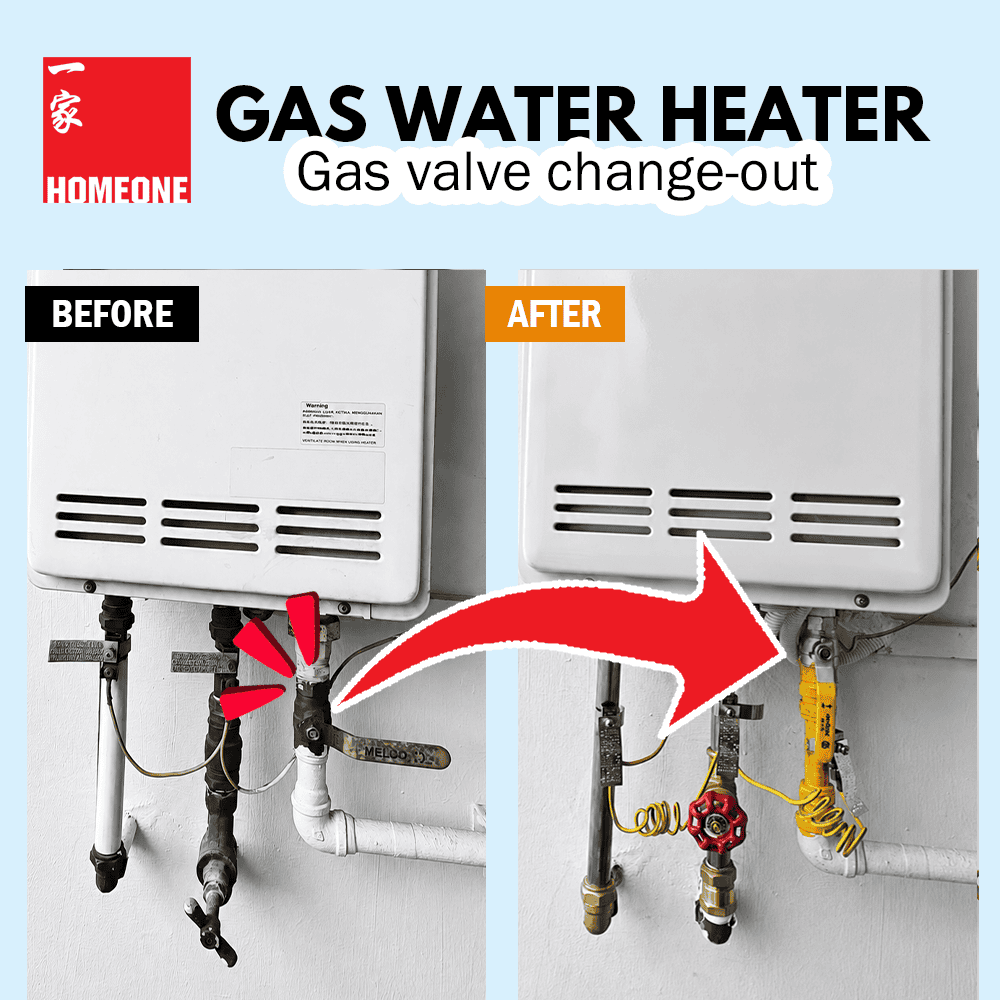
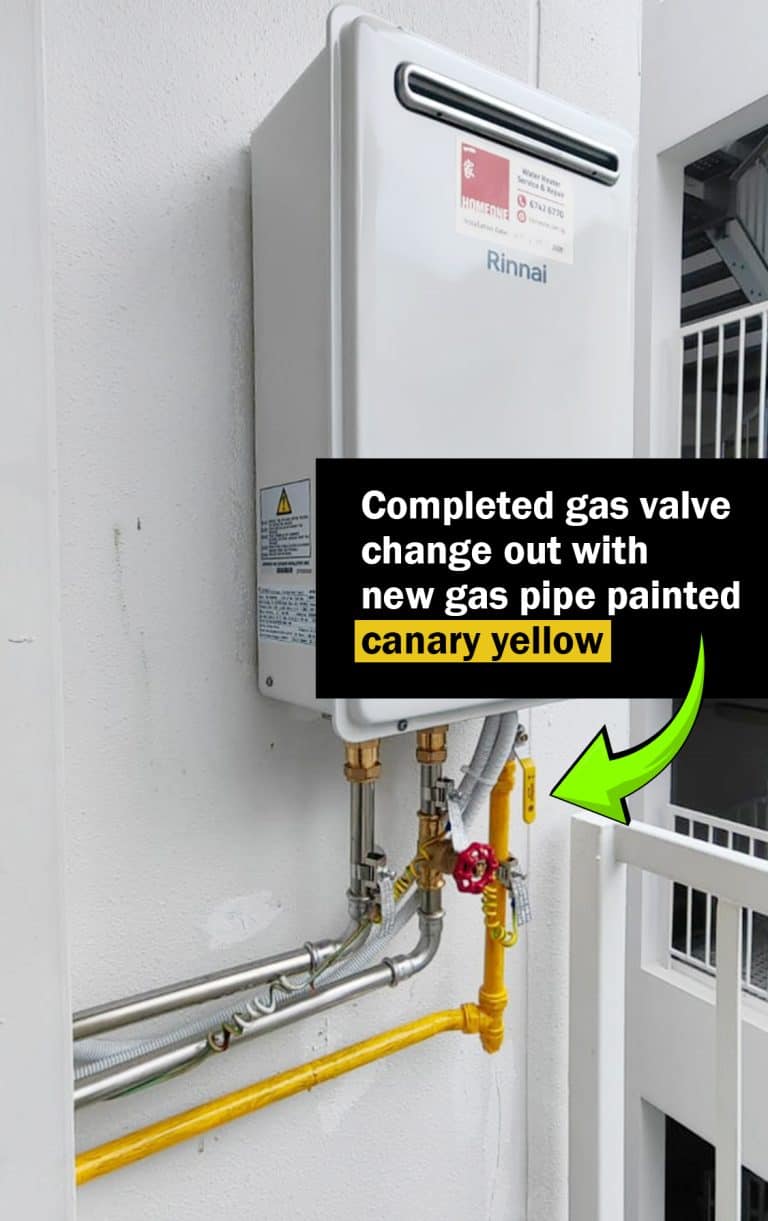
Gas Valve Change - Out
Why we replace the gas valve on every gas water heater replacement — and why reusing the old one is not an option.
What is a gas valve?
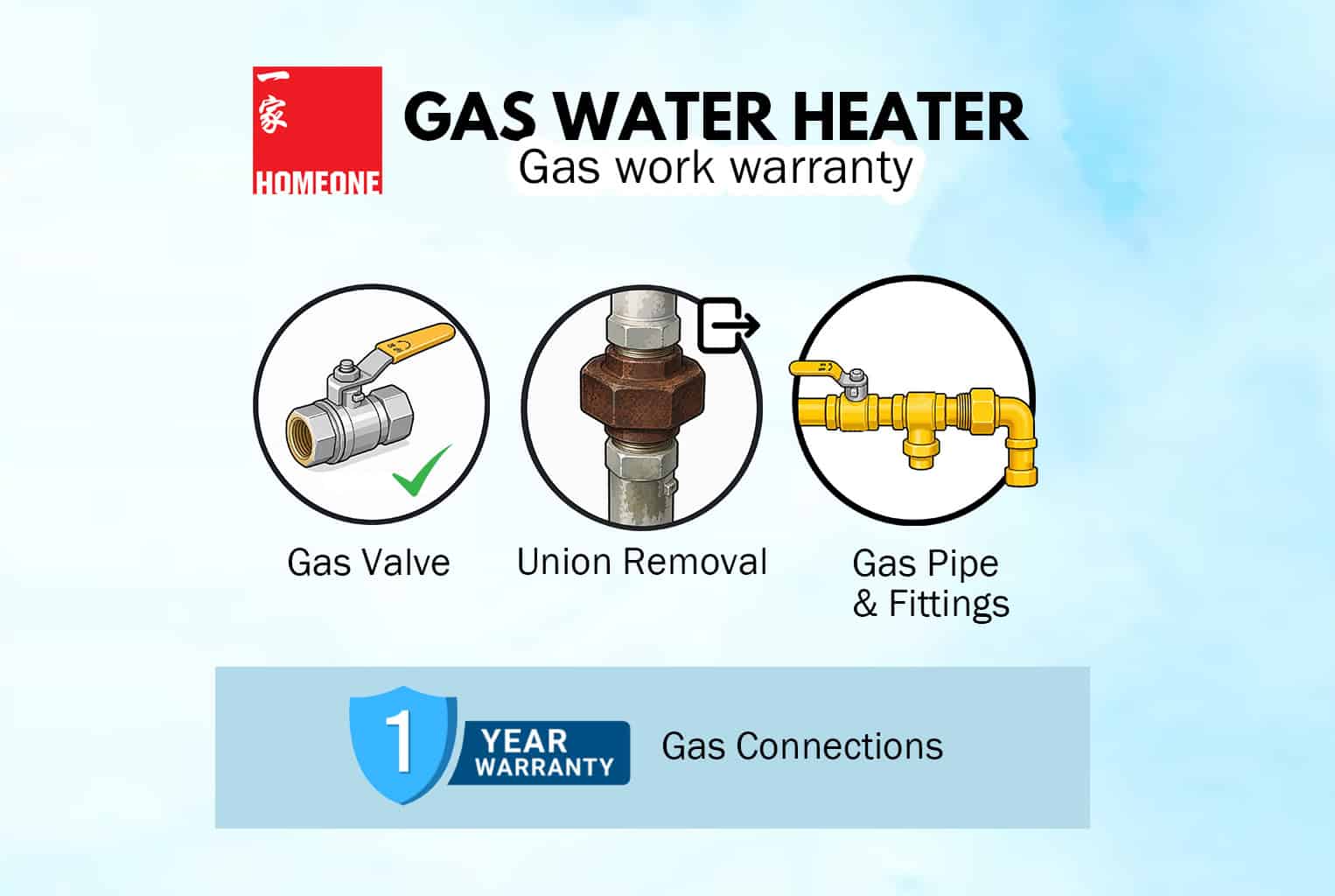
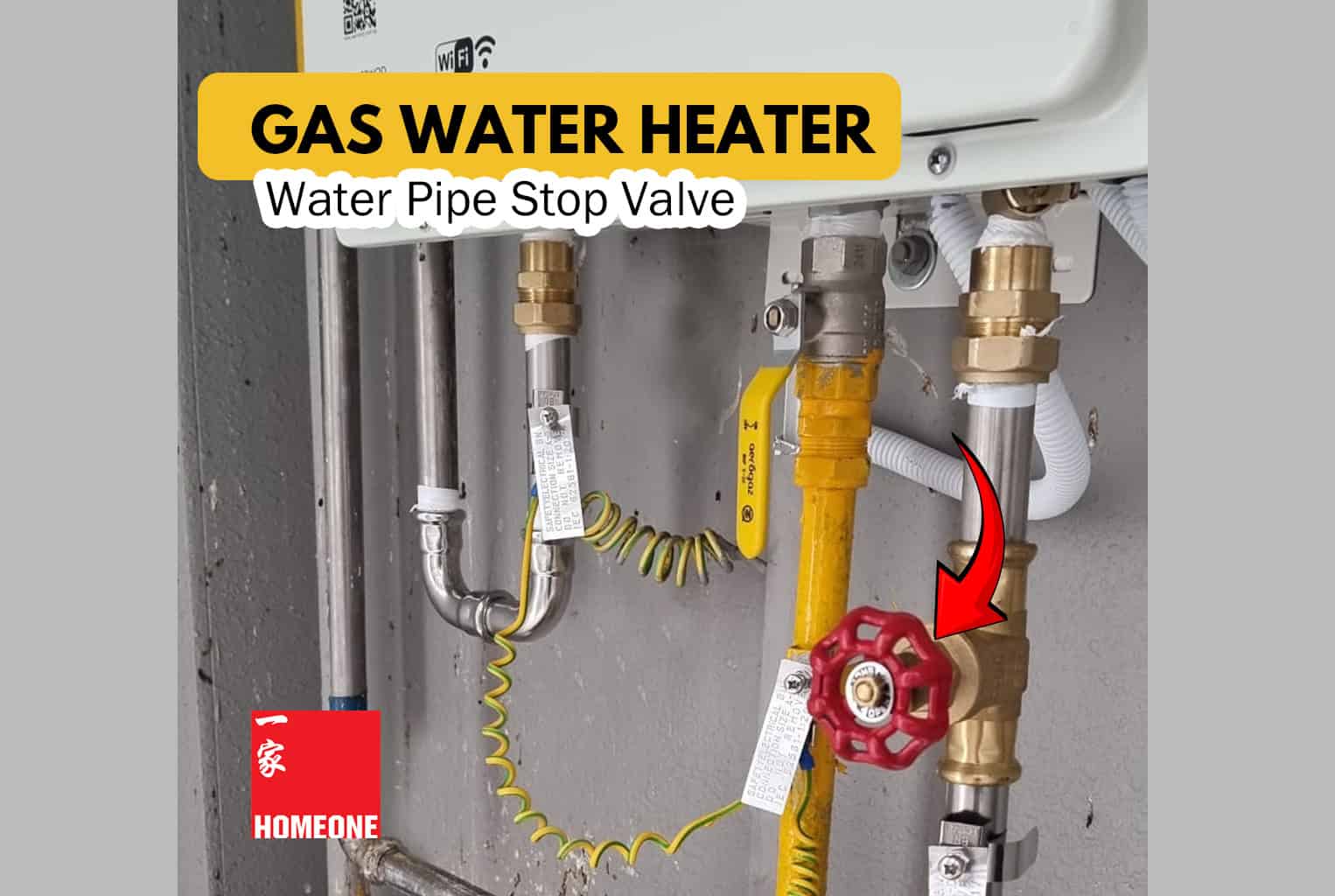
The gas valve is the primary safety isolation point for your gas water heater. Its sole purpose is to completely shut off the gas supply to the heater — for maintenance, emergency isolation, or replacement — without interrupting the gas supply to the rest of your property.
When you need to turn off the gas to your heater, this valve is what you reach for. It must work perfectly, every time, without hesitation.
Need a Gas Valve Change - Out?
💬 Engage us for work done right — PUB-compliant, trusted, guaranteed.
Why we replace it on every job
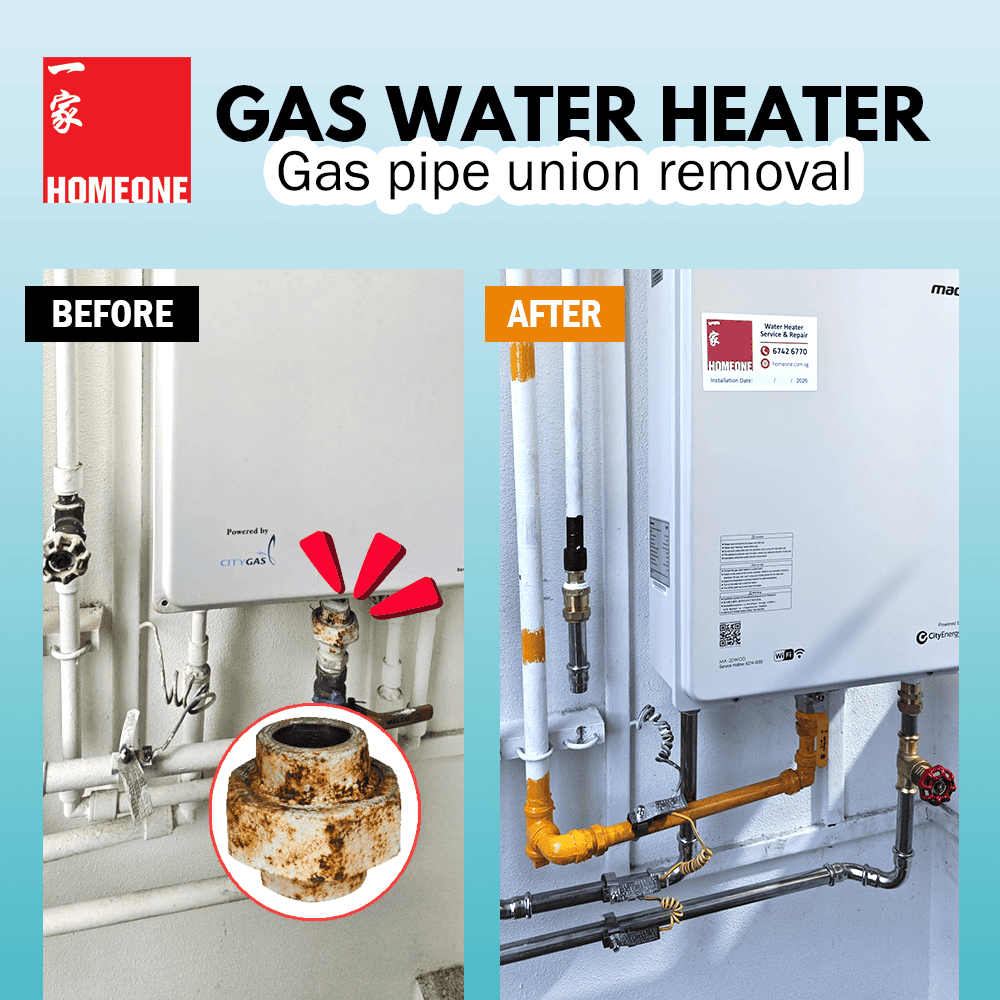
When a gas water heater is replaced, the gas valve must be disconnected and reconnected. This is where the problem starts. The valve was originally hard-tightened onto tapered pipe threads designed to seal through metal-to-metal compression. That initial tightening caused intentional deformation of the threads — this is how the joint becomes gas-tight.
The moment you loosen that valve for the heater swap, you break the seal that was formed years ago. Retightening it does not recreate the original seal. The threads have already deformed. The mating surfaces have already compressed. What you get instead is a joint that looks tight but has micro-gaps invisible to the eye.
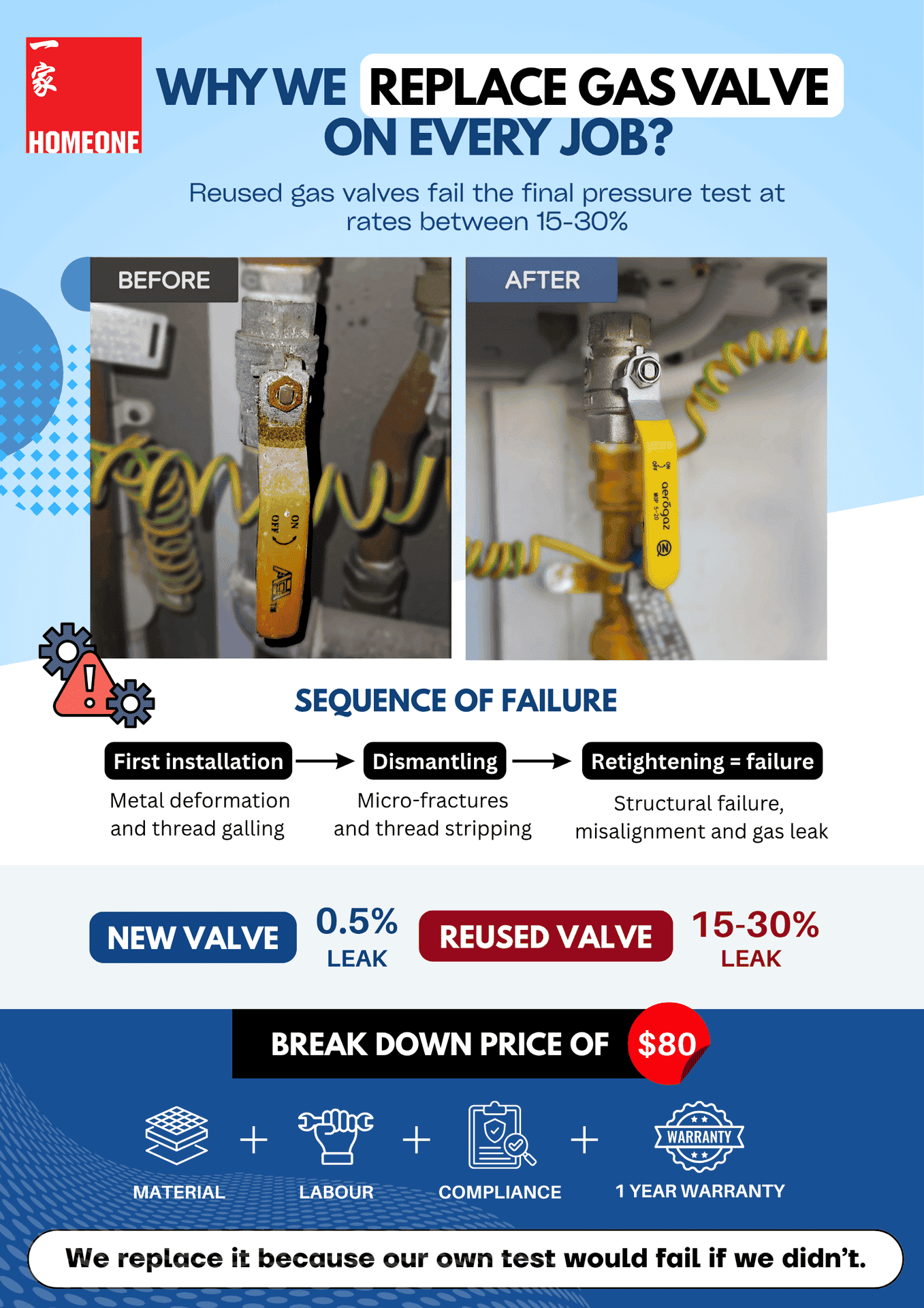
This is exactly what the final pressure test detects — and why reused valves fail the test at rates between 15% and 30%.
What happens when you reuse the old valve
Thread deformation and galling. Tapered pipe threads rely on metal-to-metal wedging to seal. Loosening and retightening strips away the tolerance that created the original seal. The threads flatten, gall, and misalign. The joint no longer seals cleanly.
Micro-fractures in the valve body. The mechanical stress of unseating a seized, aged valve introduces micro-fractures in the forged brass body. These are invisible to the naked eye but will grow under the thermal cycling and vibration of the new heater. Over weeks or months, they can develop into a gas leak.
Brittle handle and seals. The plastic or die-cast aluminium handle and internal packing seals degrade over years of heat and humidity exposure. Reinstalling the valve subjects these fatigued components to fresh torque. The handle becomes prone to snapping during the next emergency isolation attempt — exactly when you need it most.
The sequence of failure
First installation → metal deformation and thread galling (by design — this is how it seals)
Dismantling for heater replacement → micro-fractures and thread stripping
Retightening onto new heater → structural failure, misalignment, and gas leaks
How we know it works
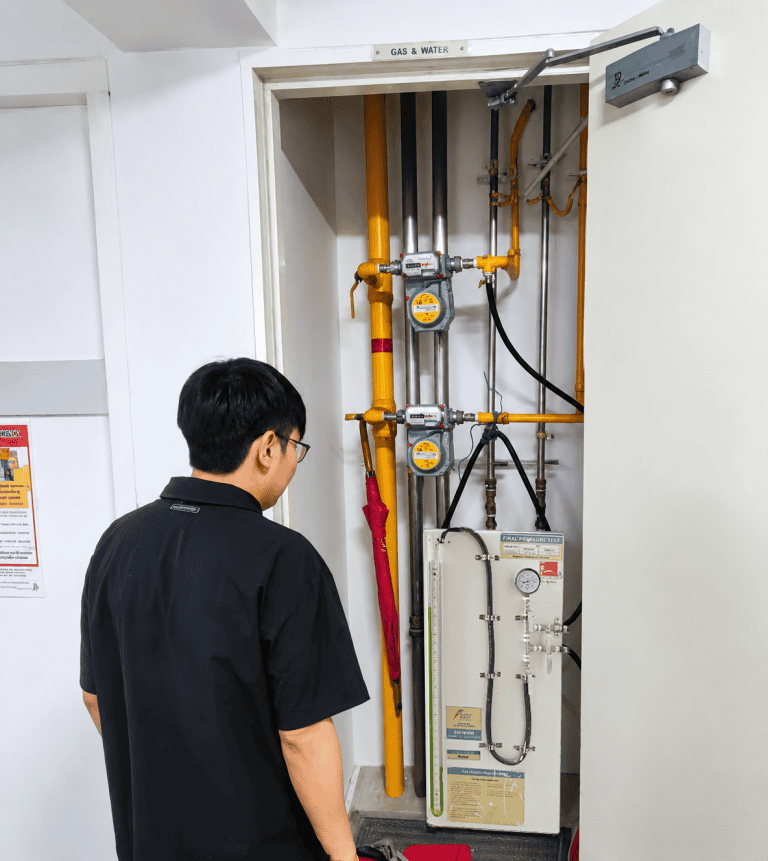
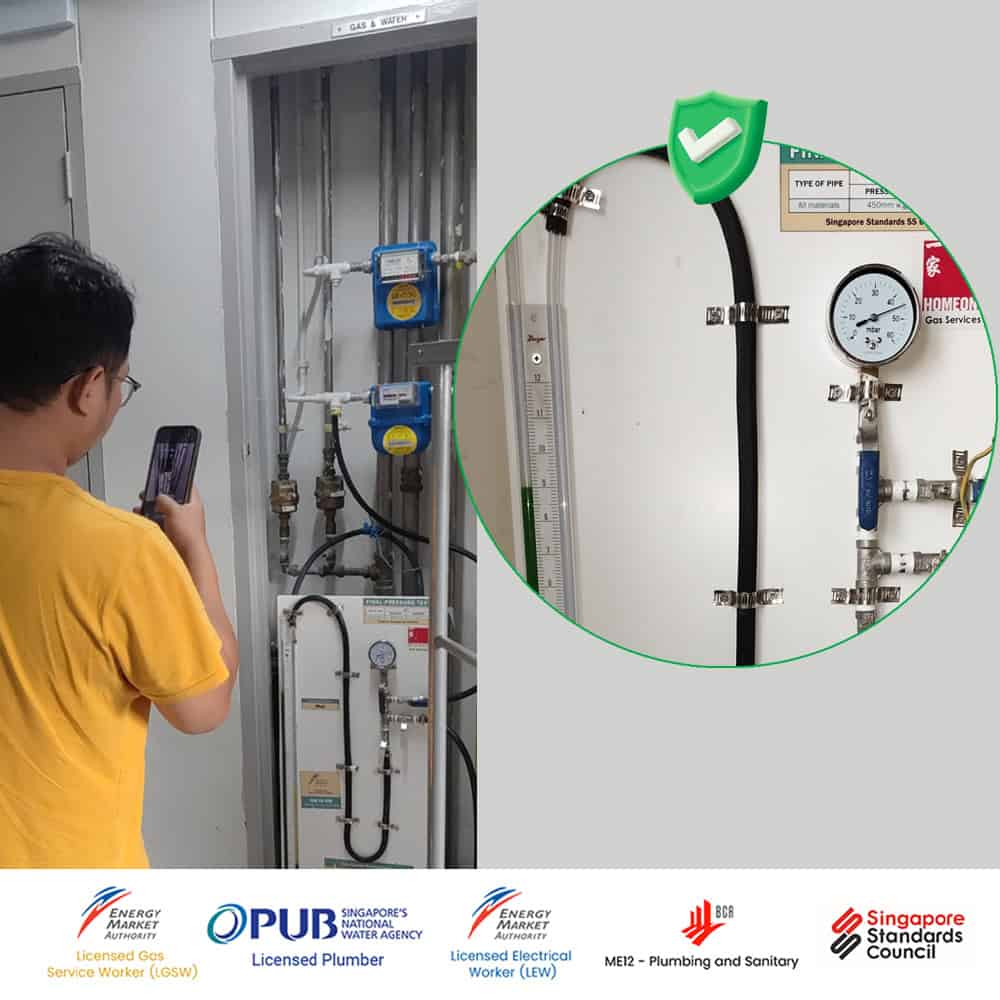
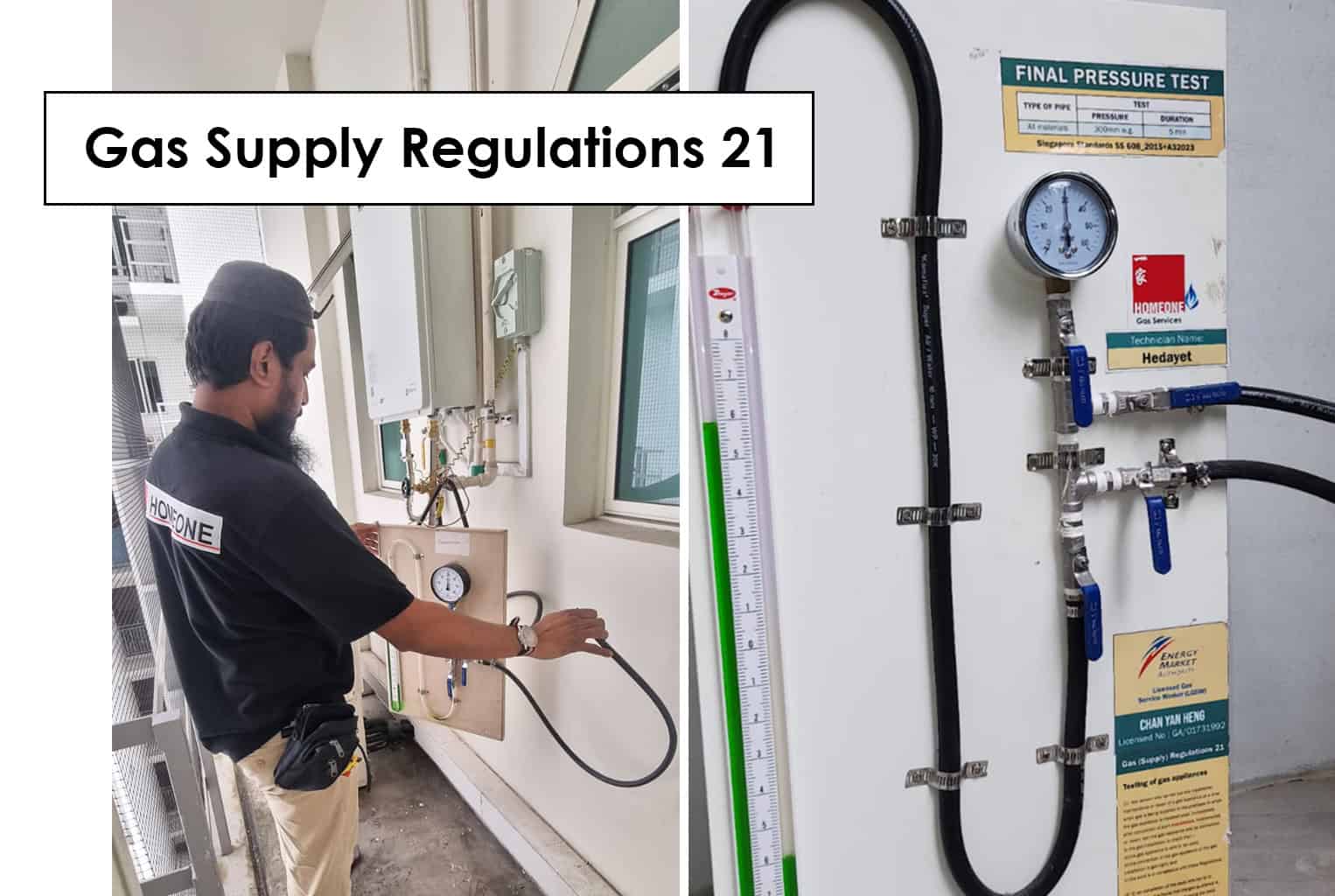
Every gas water heater replacement at Homeone includes a final pressure test. This test pressurises the gas line and measures whether the pressure holds steady. If it drops, there is a leak — no matter how small. A handheld gas detector, which is what most other installers use, can detect large leaks but cannot detect the micro-leaks that develop from reused fittings. The final pressure test can. This is why Homeone replaces the gas valve rather than reusing it — because our own test would fail if we didn’t.
Leak probability comparison
New certified valve: less than 0.5% leak probability. Pristine threads, fresh polymer seats, perfect mechanical seal.
Reused valve: 15–30% leak probability. Deformed threads, compressed mating surfaces, degraded seals. Even if it passes an initial test, the risk of a slow micro-leak developing within weeks remains elevated.
Why the charge is $80 when the valve costs less than $20
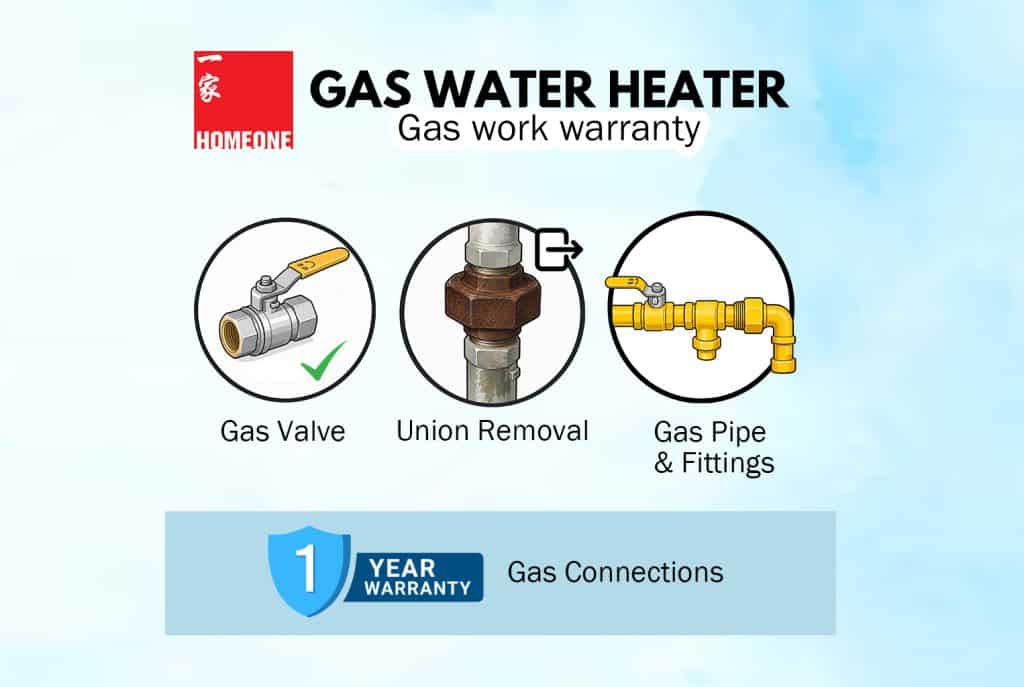
You are not buying a piece of brass. You are buying the labour to install it correctly, the liability transfer when a licensed professional certifies it is gas-tight, and the warranty that covers you if anything goes wrong within a year.
| What you're paying for | What it means |
|---|---|
|
Material
|
A new, certified gas valve — less than SGD 20 in material cost |
|
Skilled labour
|
A trained technician's time to remove the old valve, prepare the threads, apply gas-rated sealant, install and torque the new valve correctly |
|
Compliance
|
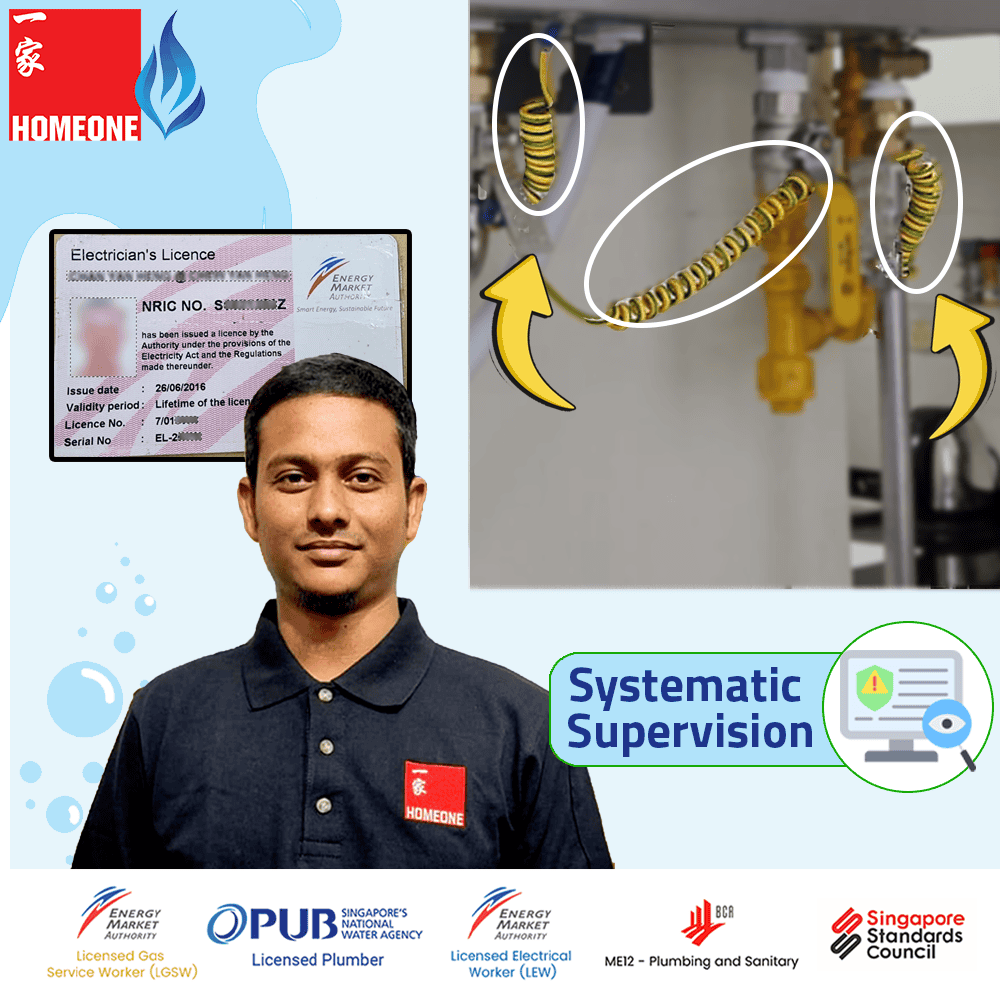
The installation is tested and certified gas-tight by an EMA Licensed Gas Service Worker under SS608:2024 |
|
1-year warranty
|
If any leak occurs within 365 days, Homeone dispatches a technician at zero cost — next business day response |
The $80 covers the entire chain from procurement to warranty. Saving $60 by reusing the old valve does not reduce the technician’s time, the testing requirement, or the certification liability. It only forces the technician to certify a structurally compromised component — which any competent licensed professional should refuse to do.
The bottom line
A new gas valve costs $80 installed, tested, and warrantied for a year. A reused gas valve costs nothing upfront and carries a 15–30% chance of a gas leak that a handheld detector won’t catch but the final pressure test will.
We replace it on every job because our own test would fail if we didn’t. That’s not an upsell. That’s what makes the test pass.
Call Now +65 6742 6770
WhatsApp +65 88226770