Capitol Park
Semi-Detached House
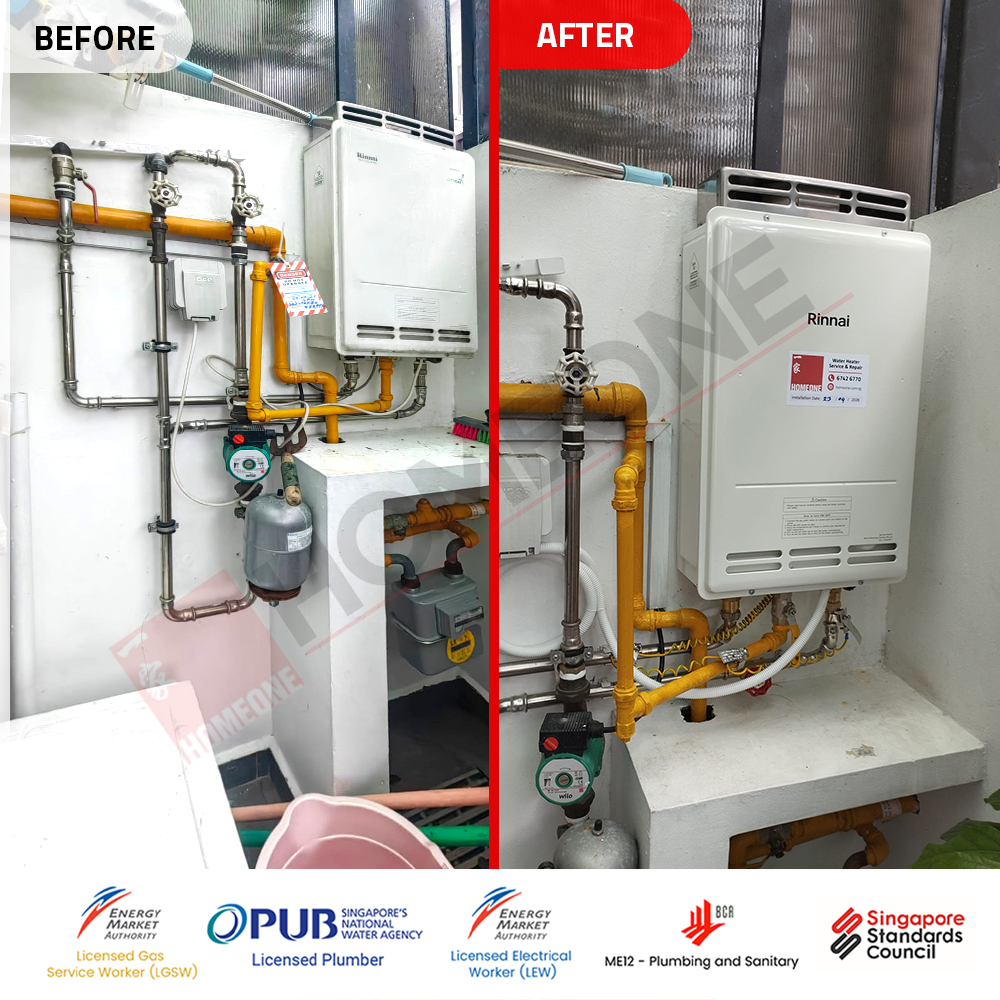
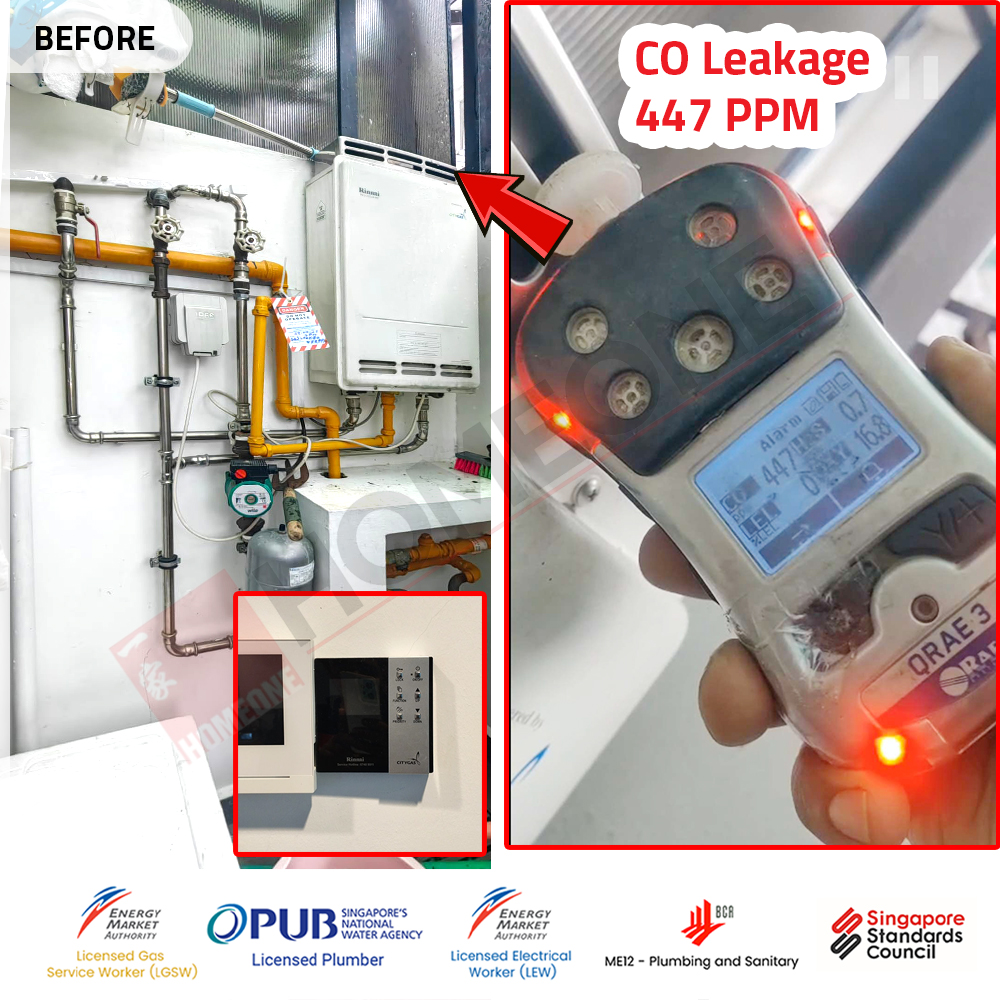
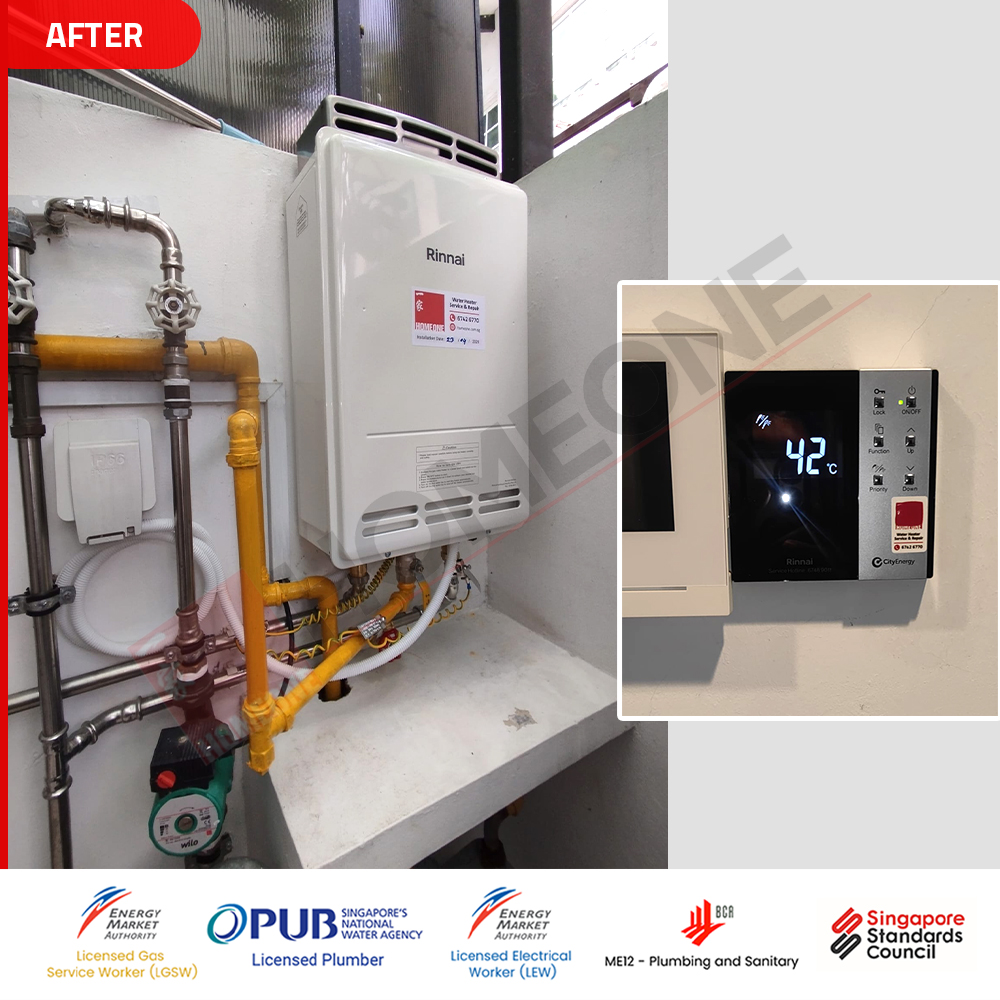
If you’re searching for a Rinnai gas water heater no hot water solution, this recent case at a Capitol Park shows exactly why timely replacement matters. The homeowner contacted us after their old Paloma gas water heater stopped producing hot water—but upon inspection, our technician discovered a far more dangerous problem: carbon monoxide (CO) leakage caused by a severely corroded heat exchanger, melted motherboard, and obstructed burner. This was no longer just a “no hot water” issue—it was a life-threatening emergency that required immediate replacement with a new Rinnai unit.
Your family's safety is non-negotiable. If your Rinnai or gas water heater has stopped producing hot water, it could be hiding a silent, deadly carbon monoxide leak. Get an instant response from our Gas Service Team — available 7 days a week!
📲 Click the button above — we'll respond within minutes!
Trusted by 10,000+ Singapore households • Fully Licensed by EMA, PUB & BCA
During the on-site inspection at Capitol Park, our technician identified multiple critical failures that made repair impossible and continued use extremely dangerous:
1. Melted Motherboard (PCB) The motherboard inside the old Paloma unit had clearly overheated and melted. Once the PCB is damaged, the heater cannot ignite properly, leaving the homeowner with no hot water. More importantly, a malfunctioning PCB can cause incomplete combustion—one of the leading causes of carbon monoxide production.
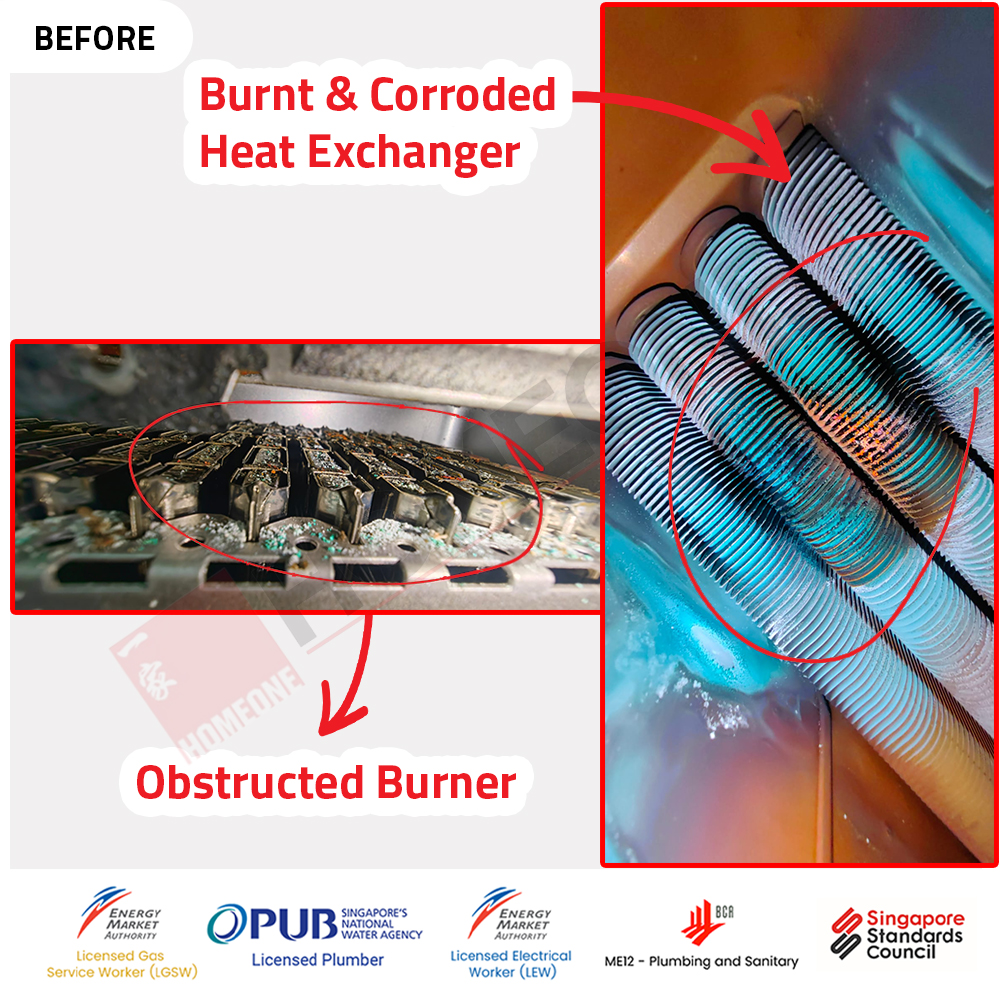
2. Burnt & Corroded Heat Exchanger The heat exchanger showed extensive burn marks, heavy copper oxidation (green corrosion), and visible rust. A compromised heat exchanger is one of the most dangerous faults in any gas heater because it allows combustion gases—including deadly carbon monoxide—to mix with the air being vented. CO is colourless, odourless, and can be fatal within minutes at high concentrations.
3. Obstructed Burner The burner assembly was heavily clogged with corrosion and debris. An obstructed burner causes incomplete combustion, producing excess carbon monoxide instead of clean heat. You could see dripping corrosion residue staining the pipework below the unit—a clear sign the heater had been failing for months.
4. Water Leakage onto Electrical Components The photos show water and corrosion residue dripping from the heater onto the gas pipes and electrical connections. This creates a dual hazard: electrical short-circuit risk and accelerated corrosion of safety-critical components.
Given the CO leakage risk, continued use of this heater could have resulted in carbon monoxide poisoning for the occupants. Replacement was not optional—it was urgent.
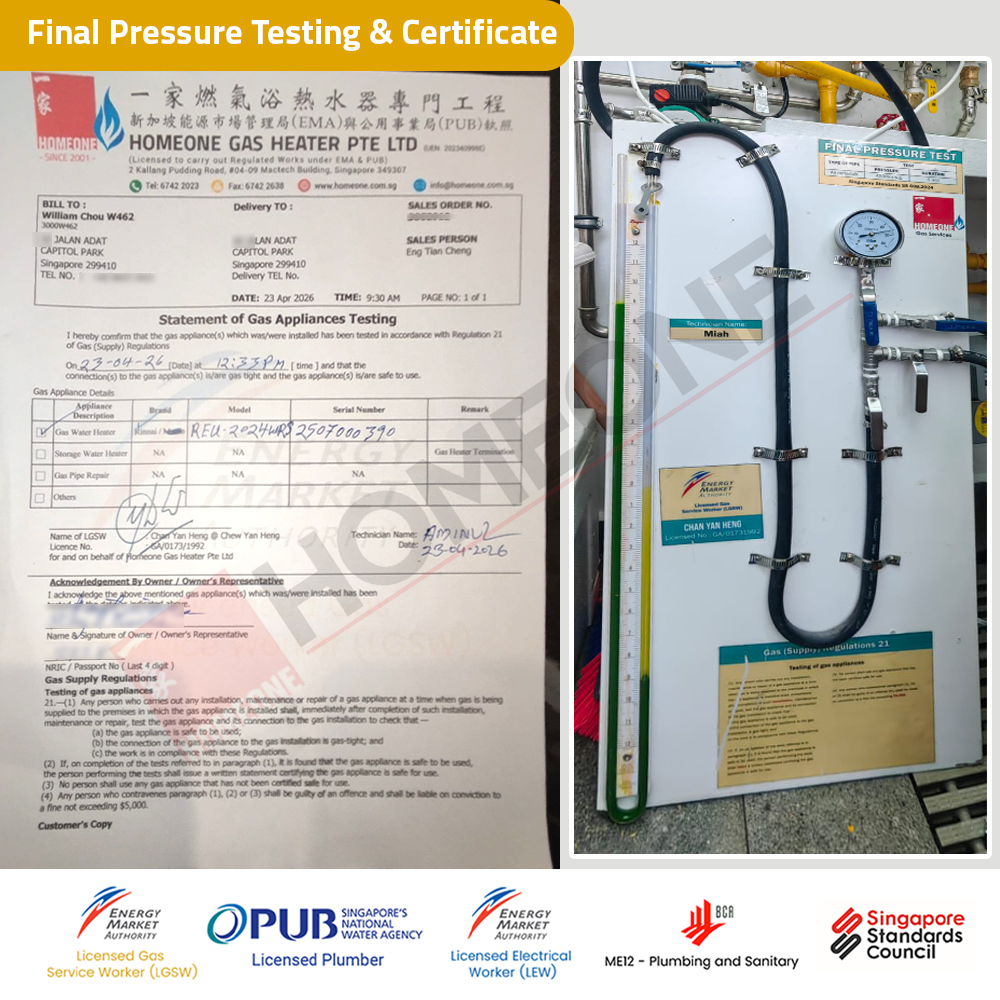
After every gas heater installation or replacement, a final pressure test at 45mbar for 5 minutes must be carried out using a U-gauge manometer. This test detects hidden gas leaks that soap testing alone may miss — protecting your family from fire, explosion, and carbon monoxide (CO) poisoning.
If any installer tells you the pressure test "can be skipped" — walk away immediately.
Safety and legal compliance are non-negotiable.
Hairline cracks and loose joints can leak gas without any smell or sound — only pressure testing exposes them.
Official documentation proving your installation meets Singapore Gas Supply Regulation 21 standards.
Prevents fire, explosion, and deadly carbon monoxide poisoning before the heater is commissioned.
Risk of fire, explosion, or CO poisoning
Non-compliant with Singapore law
You bear full cost of accidents
SILENT & INVISIBLECO itself is completely odourless, colourless, and impossible to detect without a CO detector. You cannot see, smell, or notice CO leaks directly — this is what makes it so dangerous.
However, you may notice signs of incomplete combustion which often produces CO: yellow or orange flames (instead of blue), visible smoke or white vapour from the heater, soot or staining around the unit, and excessive condensation on nearby gas water heater flue.
The most critical warning signs are physical symptoms when at home: unexplained headaches, dizziness, nausea, or drowsiness that improve when you leave the house. If multiple people experience these symptoms, evacuate immediately.
If you suspect a CO issue: shut off the gas supply, open all windows, evacuate everyone, and call a Licensed Gas Service Worker. Do not re-enter until the unit has been professionally inspected. Consider installing a CO detector near your gas heater.
LINKED RISKSPossibly, yes. Many of the same faults that cause a "no hot water" situation — a damaged heat exchanger, blocked burner, or failing PCB — can simultaneously cause incomplete combustion and CO production.
In some cases, communication cable faults between the controller and the heater can cause intermittent or total hot water failure. This is typically straightforward to diagnose and fix by a qualified technician.
AROUND 4 HOURS ON-SITEAt Capitol Park, the full replacement — including removal of the old Paloma unit, pipework adjustments, Rinnai installation, gas leak testing, and final commissioning — was completed in around 4 hours.
Actual time on-site depends on the complexity of the existing pipework configuration and whether any modifications are required. Our team arrives prepared with standard fittings and tools to minimise delays and complete the job in a single visit wherever possible.
LICENSED VS UNLICENSEDInsurance coverage depends entirely on whether your gas heater was installed by a Licensed Gas Service Worker (LGSW) and whether a valid pressure test certificate was issued at the time of installation.
Licensed installations: Typically covered under standard home insurance policies. The proper documentation (LGSW certificate, pressure test results, compliance records) proves the installation met Singapore Gas Supply Regulations, which insurers require to process claims related to gas accidents.
Unlicensed installations: Almost always void insurance claims in the event of fire, gas explosion, or CO-related incidents. Without proper licensing and certification, you bear the full cost of any resulting property damage, medical treatment, and liability claims. This can easily run into tens or hundreds of thousands of dollars.
This is one of the most critical reasons to insist on licensed installation and proper documentation from day one — it's not just about safety, it's about financial protection.
RINNAI MANUFACTURERYour replacement unit comes with Rinnai's standard 2-year manufacturer warranty covering factory defects on parts and the heat exchanger, in accordance with Rinnai Singapore's warranty terms at the time of purchase.
HOMEONE WORKMANSHIPOn top of that, Homeone Engineering provides a 1-year workmanship warranty covering our installation labour. All documentation — including the gas leak test certificate required under Singapore Gas Supply Regulation 21 — is handed over to you upon job completion.
Table of Contents
Toggle