
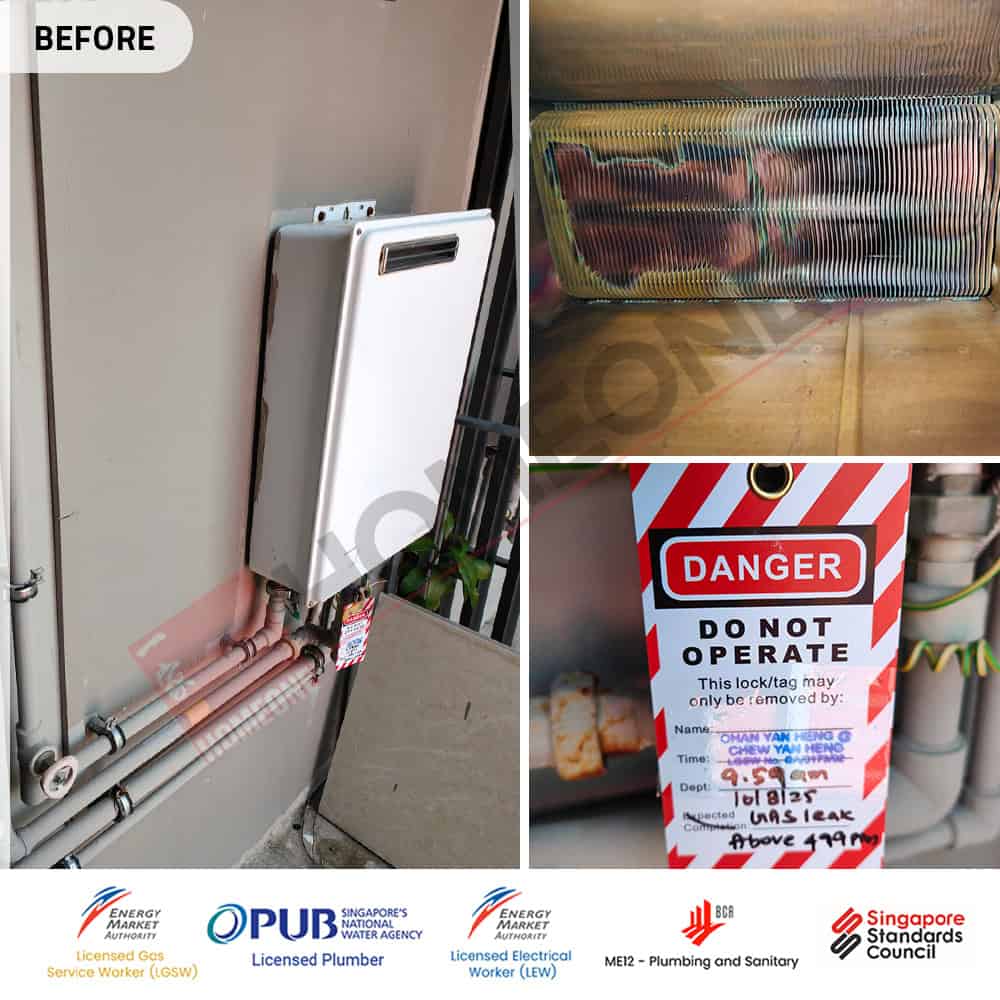
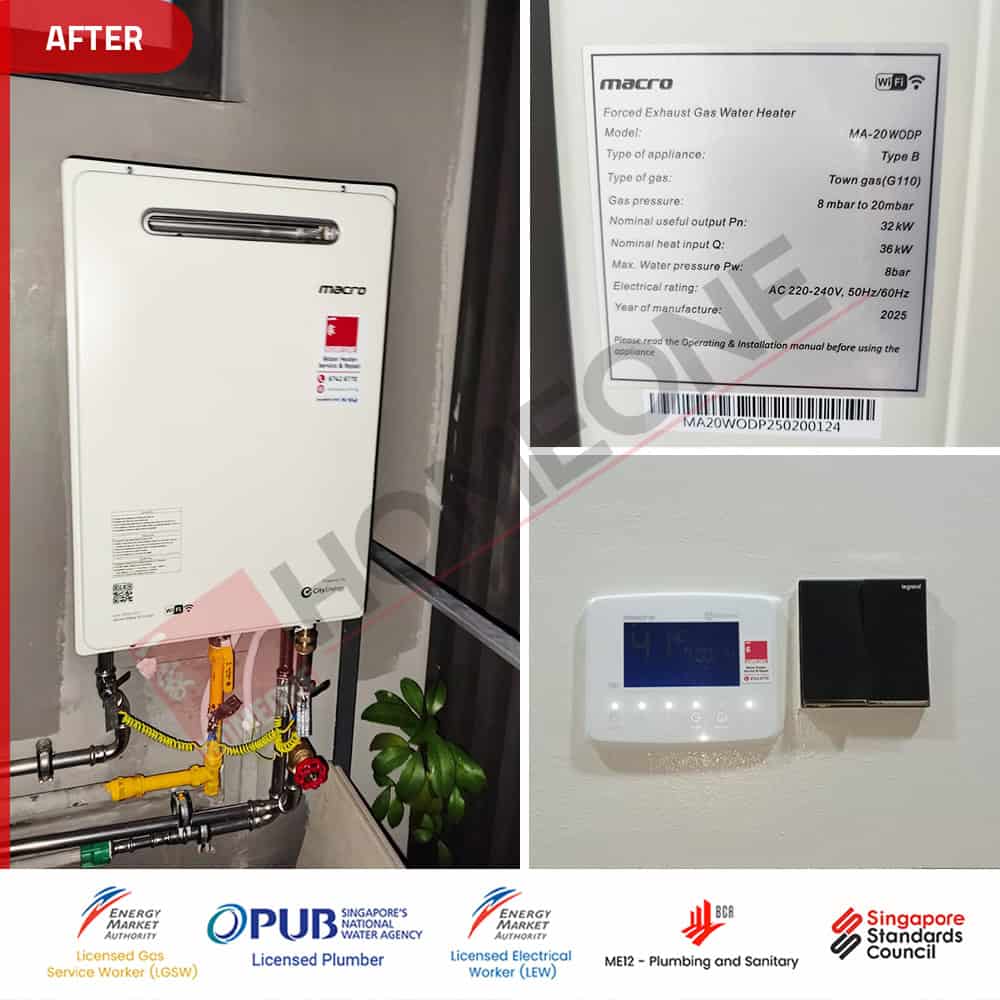
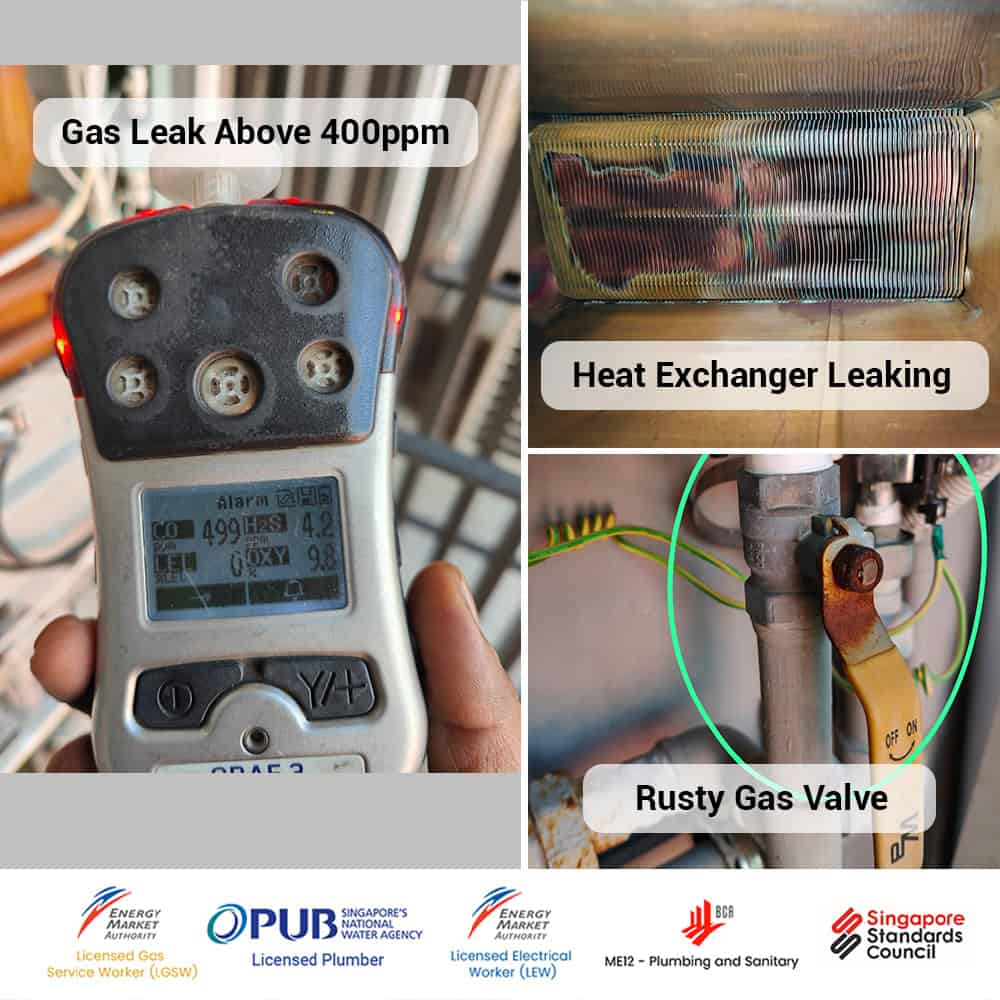
-
1
Check the Control Panel Display
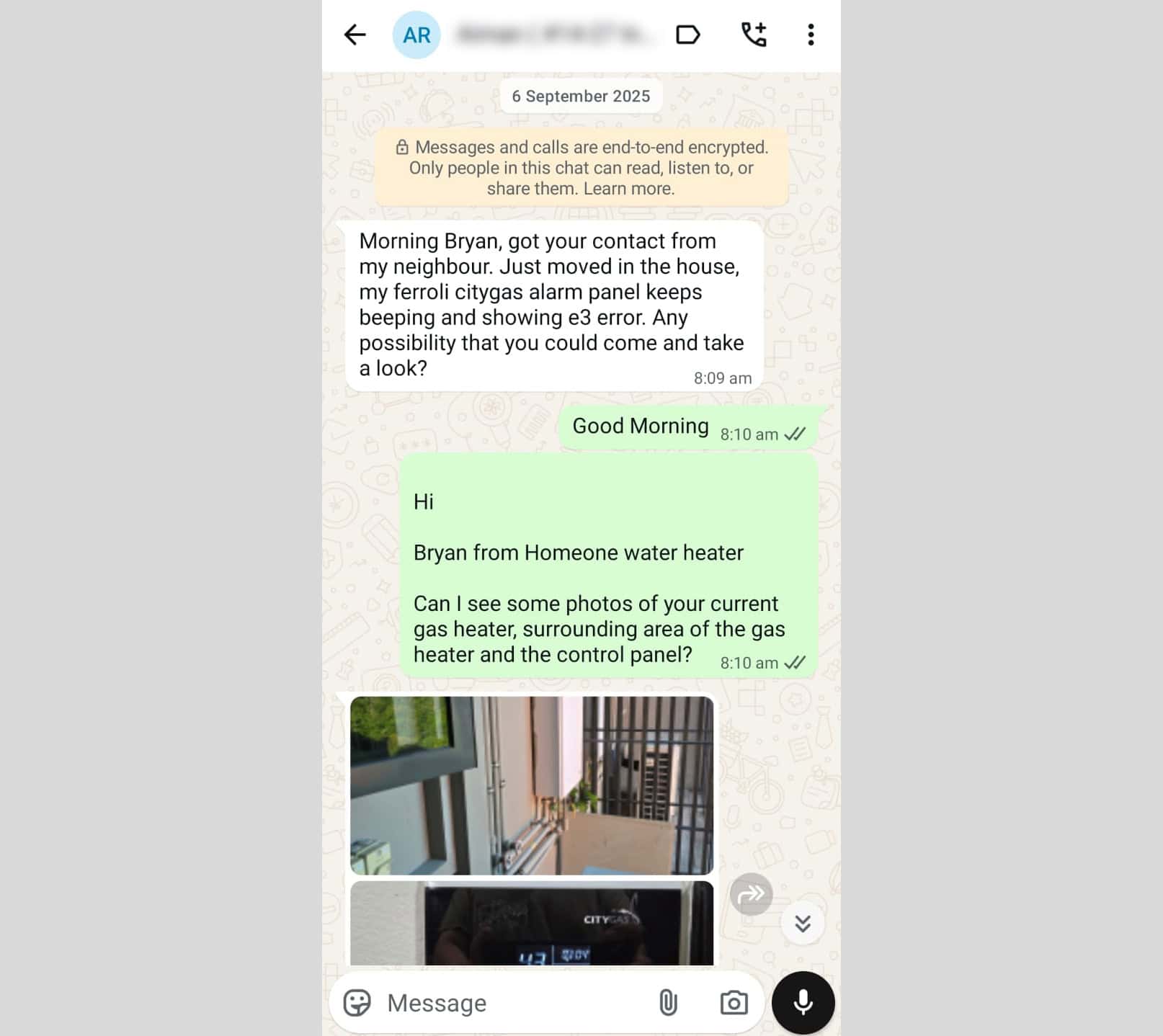
Look at the heater’s display panel for any error codes (e.g. E3, E5, E8). These codes help indicate whether the issue is related to overheating, airflow, internal components, or safety shutdown.
-
2
Observe When the Beeping Happens
Note if the beeping occurs:
- Immediately after turning on the heater
- During hot water usage
- After a few minutes of operation
This timing can indicate overheating, unstable combustion, or internal sensor faults.
-
3
Check for Unusual Smells or Heat
If you notice:
- A gas smell
- Excessive heat around the heater casing
Stop using the heater immediately, as these may point to gas leakage or heat exchanger issues.
-
4
Inspect for Visible Rust or Water Leaks
From the exterior (without opening the unit), look for:
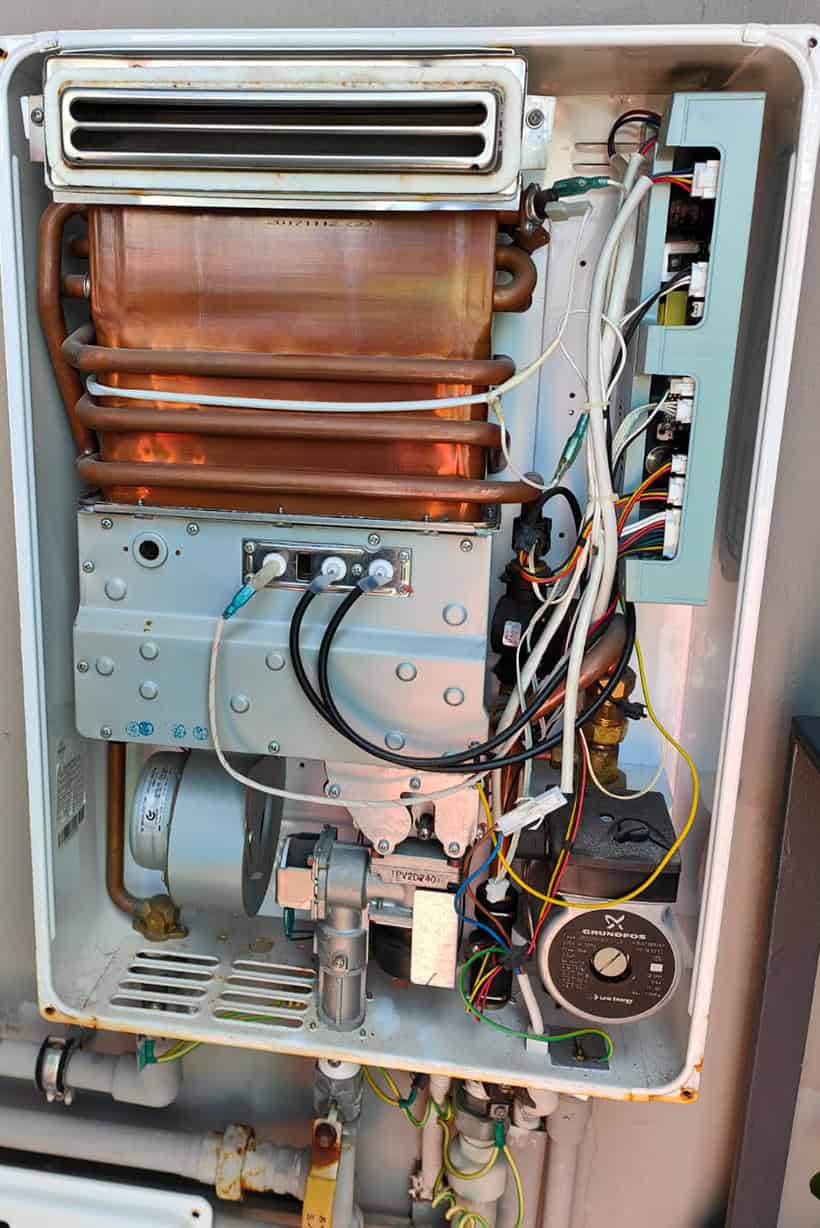
- Rust around the gas valve or joints
- Water stains or dripping beneath the heater
These signs often indicate age-related component failure that can trigger alarm beeping.
⚠️ Important: A Gas water heater that continues to beep should not be ignored or forced to operate. The alarm is designed to prevent unsafe usage and protect occupants from potential gas or overheating hazards.