

Water Heater Leaking?
A leaking storage water heater usually points to one of four things — a corroded inner tank, a failed pressure-relief valve, loose or aged pipe connections at the inlet and outlet, or condensation that is being mistaken for a leak. Each has a different fix, a different cost, and a different urgency.
If water is pooling under the heater, dripping onto electrical fittings, or you see steam from the tank body, switch off the unit at the MCB, shut the inlet valve, and contact us. Water on live electrical components is a shock and fire risk. A leak from the tank body can suddenly worsen — do not switch the heater back on until we have inspected it.
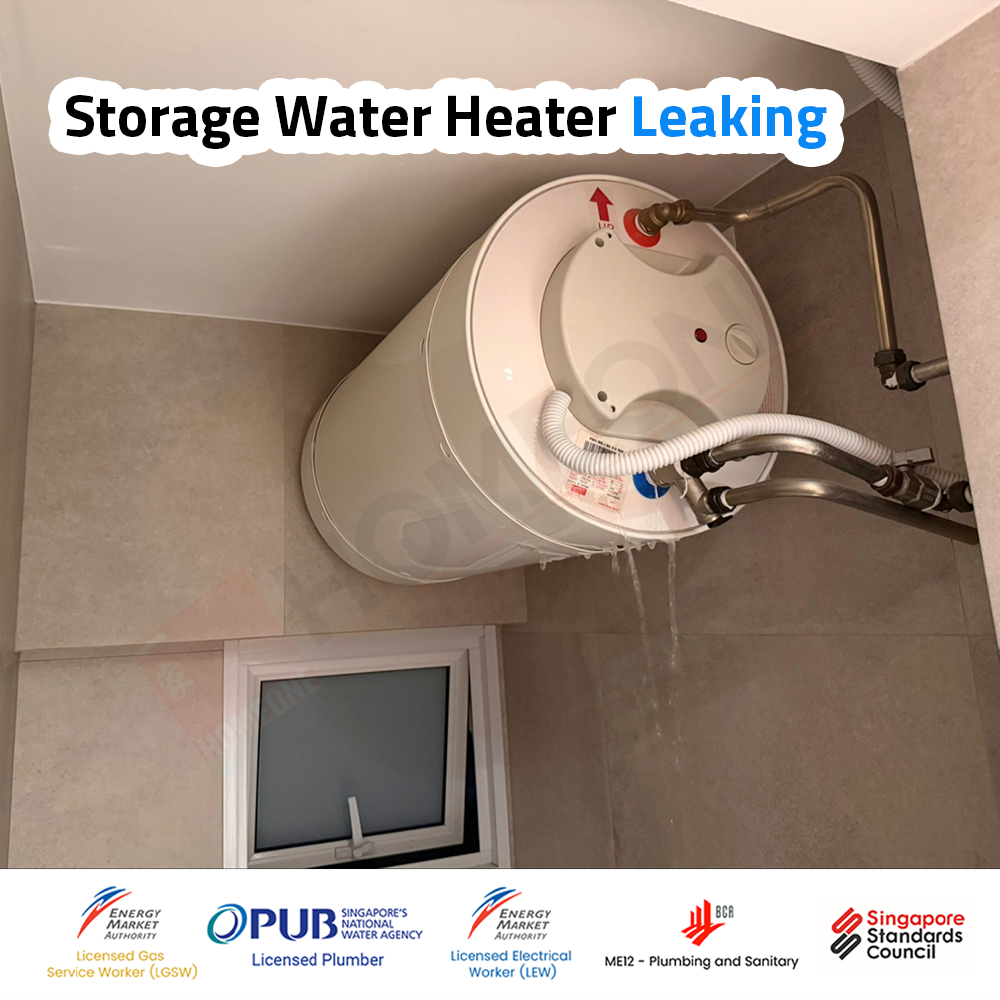
Safety Warning
The Hidden Cause We See Most Often:
Anode Depletion → Tank Corrosion → Sudden Burst
Most homeowners don't realise that a tank-body leak usually starts years earlier — with a part most people have never heard of. Here's the failure chain our technicians find again and again during inspections.
The failure chain

On-Site Method
How our technicians actually diagnose it.
Step 01
Look first 🔍
Where is the water coming from — the top of the unit, the bottom, the pipe connections, or pooling on the floor below? When did it start? Has anyone serviced or moved the unit recently? Most leaks are identified by sight before any tool comes out.
Step 02
Isolate and dry 🔧
We switch off the heater at the MCB, shut the inlet valve, and dry the unit completely. Then we watch where water reappears first. A dry-and-watch test tells us whether the leak is active, intermittent, or pressure-driven — and rules out condensation being mistaken for a leak.
Step 03
Trace to the source 💧
We check the four common sources in order: inlet and outlet connections, the temperature and pressure relief valve, the drain valve, and the tank body itself. Connection leaks tighten or reseal. Valve leaks replace. A tank-body leak means the inner tank has corroded through — no repair will hold.
Step 04
Quote before we work 📋
You see the diagnosis and the price before anything is dismantled or replaced. Tighten, reseal, valve replacement, or full unit replacement — the decision is yours, with full cost transparency. No surprises in the invoice.
OUR PORTFOLIO
View our storage heater leaking cases


Storage Water Heater Leaking Water: 10 Key Reasons
Having a storage water heater leak can be a frustrating and costly experience. From damp false ceilings to water pouring down into the bathroom, such leaks are a common issue for homeowners with electric storage heaters installed above their false ceilings.
Water heater leaking?
Most leaks come down to a connection, a valve, or the tank itself. A trained technician on-site tells you which — before any quote.
OUR PROCESS
Homeone Safety Standard
When you book a CO inspection with us, we follow a strict compliance workflow — not a visual check, not a guess. Every step is documented, licensed, and accountable.
Storage Water Heater Leaking – FAQ
Learn the common causes behind a leaking storage water heater, which leaks can be repaired and which mean the tank has failed, and when proper inspection or replacement is necessary.
Why is my storage water heater leaking?
A leaking storage heater usually points to one of four causes: loose or corroded inlet and outlet connections, a failed temperature and pressure (T&P) relief valve, a worn drain valve, or corrosion of the inner tank itself. Condensation on a cold inlet pipe is sometimes mistaken for a leak.
Is a leaking storage heater dangerous?
It can be. Water pooling near electrical fittings is a shock and fire risk, and a slow leak from the tank body can suddenly worsen into a full burst. If water is dripping onto wiring or the MCB, switch off the heater at the MCB and shut the inlet valve before contacting us.
Does a leaking heater always need replacement?
No. Most leaks are connection or valve issues that can be repaired on the same visit. Only when the inner tank itself has corroded through does the heater need replacing — and in that case no repair will hold, so replacement is the only safe option.
How do I know if it is the tank or just a connection?
Connection leaks appear at fittings, unions, or visible pipework above or beside the unit. Tank leaks appear from the body of the heater itself — usually the bottom seam — and the water keeps coming even after the connections are dried and isolated. A proper on-site inspection confirms which it is.
What is the T&P relief valve and why does it drip?
The temperature and pressure relief valve is a safety device that releases water if pressure or temperature inside the tank rises too high. Occasional discharge is normal. Constant dripping means either the valve has failed or the system pressure is too high — both need checking before replacing the valve.
Can a leaking storage heater be repaired without replacing it?
In many cases, yes. Tightening or resealing connections, replacing a failed T&P valve, or swapping a worn drain valve can restore the unit to full working condition. Tank-body leaks are the exception — those cannot be repaired and require replacement.
How long does a storage water heater usually last before the tank leaks?
Most residential storage heaters in Singapore last between 8 and 12 years before the inner tank shows signs of corrosion. Hard water areas, infrequent flushing, and a failed sacrificial anode shorten this lifespan. A heater leaking from the tank body past the 10-year mark is usually at end of life.
Who should inspect a leaking storage water heater?
Storage heater leak inspections should be carried out by an EMA-Licensed Electrical Worker (LEW) for the electrical isolation and reconnection, with a PUB Licensed Plumber for any plumbing connection work. Both licences are legal requirements in Singapore for work on a heater's electrical supply and water connections.